
Lehr- und Versuchsübung ‘Wie das Heer Kämpfen Wird!’ ~ Friedrich Merz, Chancellor of Germany, visits the Bundeswehr, reports Carl Schulze.
~
On 14th May 2025, shortly after taking office, German Chancellor Friedrich Merz declared in his first Government Policy Statement that his government would provide the financial means for the German Armed Forces to become the strongest and most powerful conventional forces in Europe. This statement was sparked and influenced by the Russo-Ukrainian War and Donald Trump’s ‘America First’ policy.
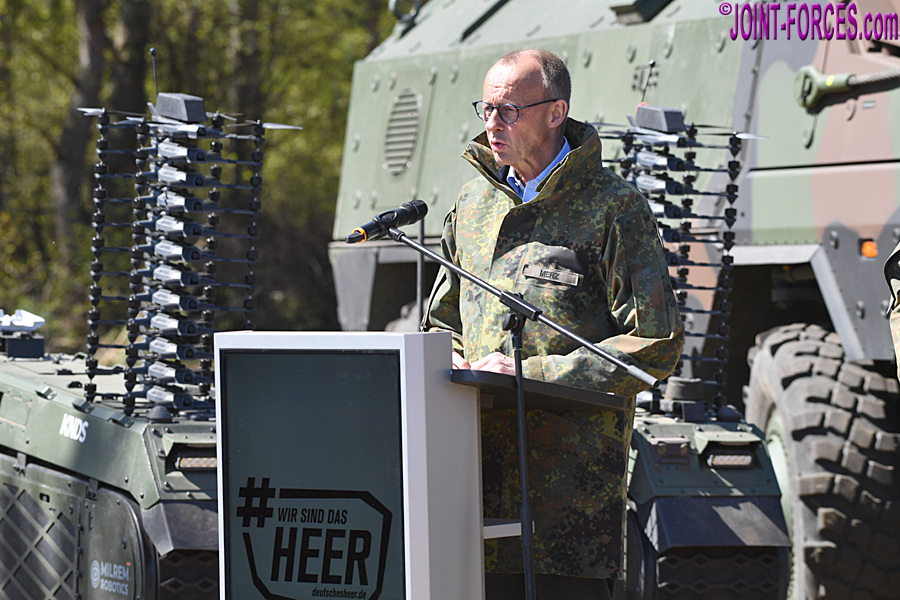
On Thursday, 30th April 2026, during a visit to the Lehr- und Versuchsübung – ‘Wie Das Heer Kämpfen Wird!‘ (Training and Experimental Exercise ‘How The Army Will Fight’) demonstration and experimental exercise, conducted on the Munster North Training Area, Chancellor Merz was shown: how the German Army plans to fight in the future; which types of weapons systems it will employ; and how its soldiers will prevail on a battlefield that has drastically changed since the beginning of the Russo-Ukrainian War.
At Range 3 of the Munster North Training Area Chancellor Friedrich Merz, accompanied by Vice-Chancellor and Finance Minister Lars Klingbeil, was welcomed by Lieutenant General Dr. Christian Freuding, Inspector of the Army. Then, in an hour-long firepower demonstration, the two politicians were introduced to a vision of how the German Army plans to conduct manoeuvre warfare in the future. Also part of the politicians’ programme was a visit to a static display that included most of the equipment shown in the firepower demonstration as well as a large variety of unmanned systems, a lunch with troops taking part in the exercise, and talks with soldiers of all ranks.
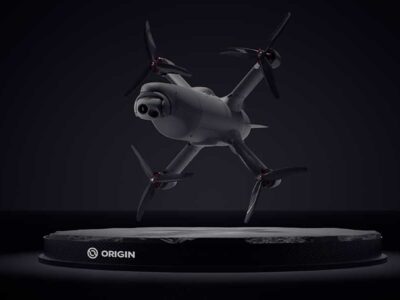
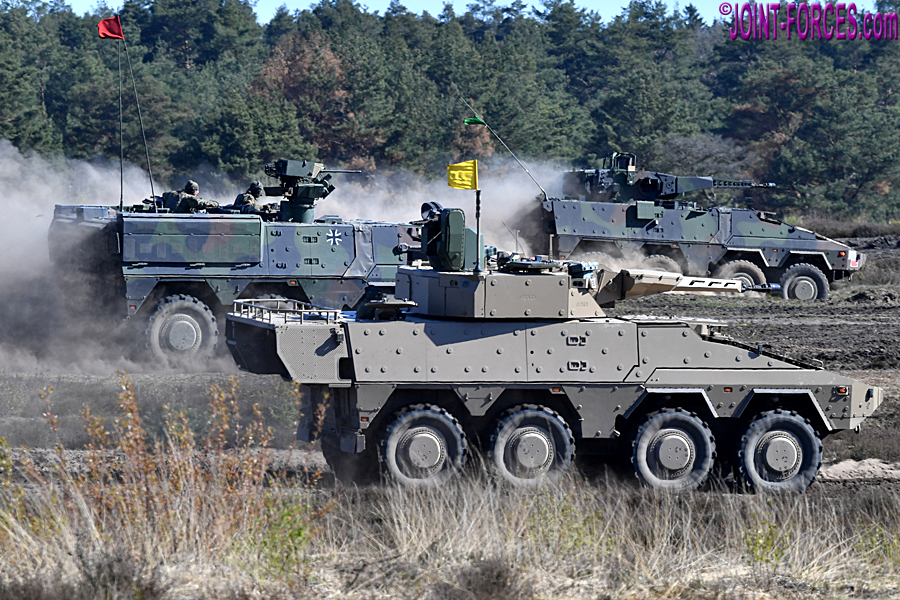
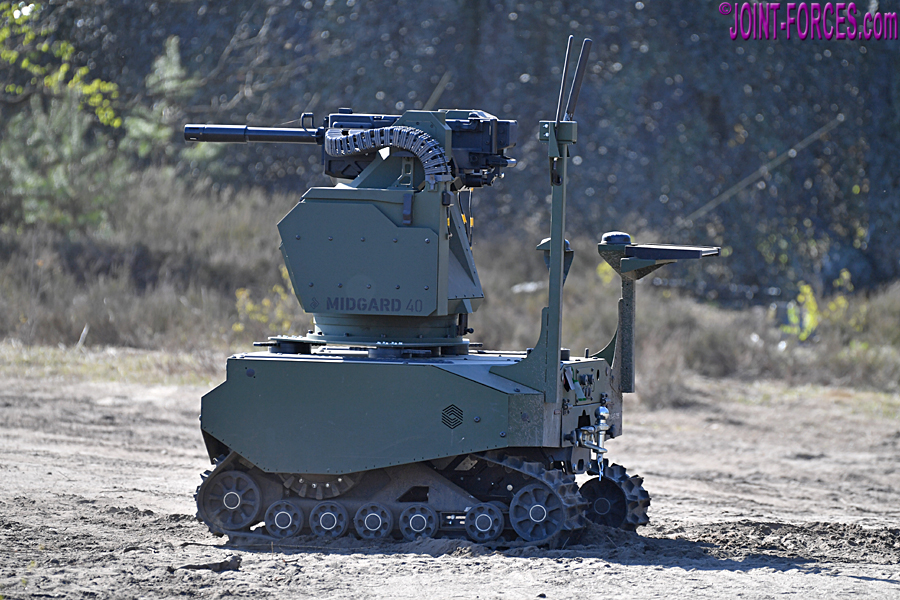
Fire Power Demonstration: Aimed at showing how ground war will be waged in the future, the firepower demonstration in general was set in a high intensity warfighting scenario with enemy forces attacking from the East. The German Army initially fought a fighting withdrawal with light and medium forces, before in the final phase a counter-attack was conducted by heavy forces supported by army aviation assets. In order to prevail on the battle field of the future, the German ground forces permanently operated under a mobile umbrella that protected them from enemy aircraft and drone strikes. During all parts of the demonstration a mix of manned and unmanned systems were employed, working in close cooperation. Command and control was assisted by AI-supported battlefield management systems. Digital communication linked sensors with effectors, reducing reaction times to an absolute minimum. The unmanned zone was situated in the area where the enemy’s umbrella and that of the German Army overlapped. The density of sensors in this area ensured targets could be identified in a matter of minutes, or even seconds, and neutralised in a similarly short time by drones or stand-off indirect fire.
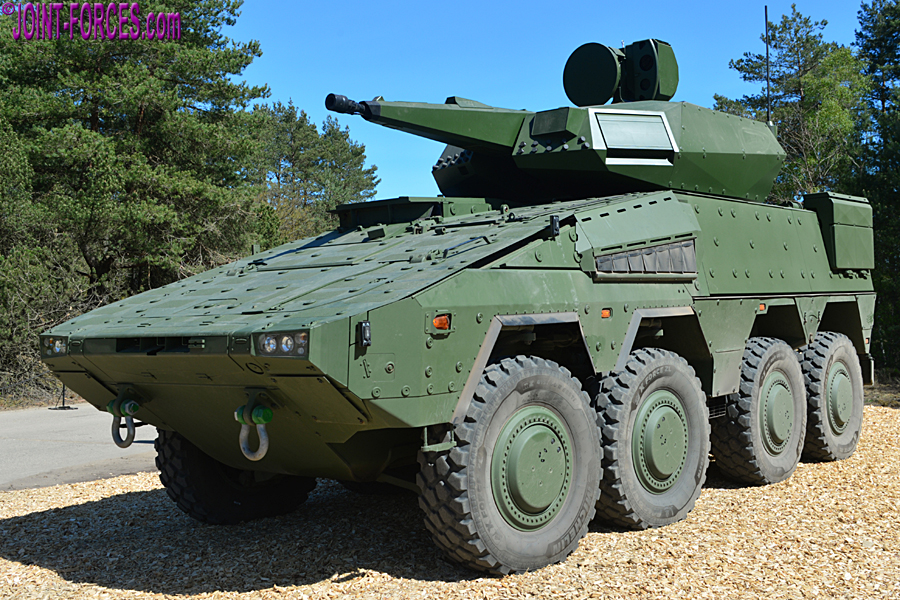
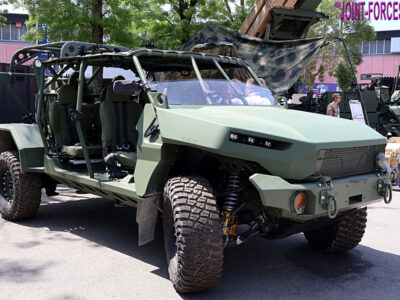
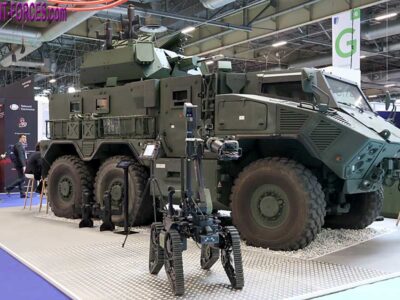
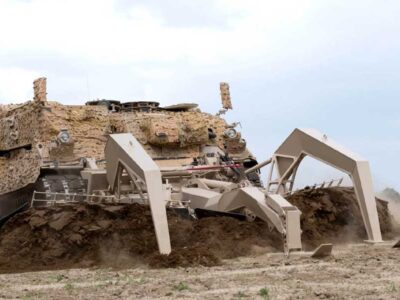
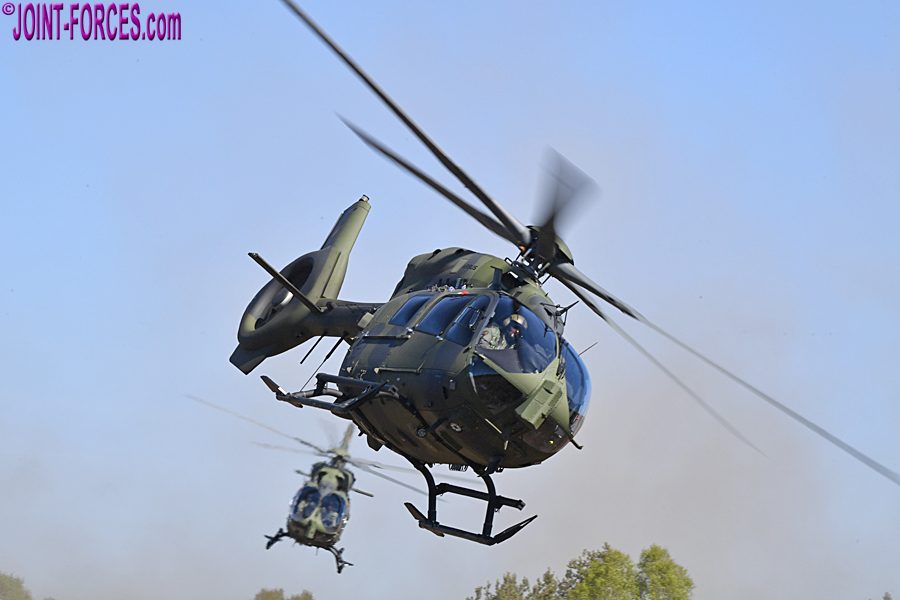
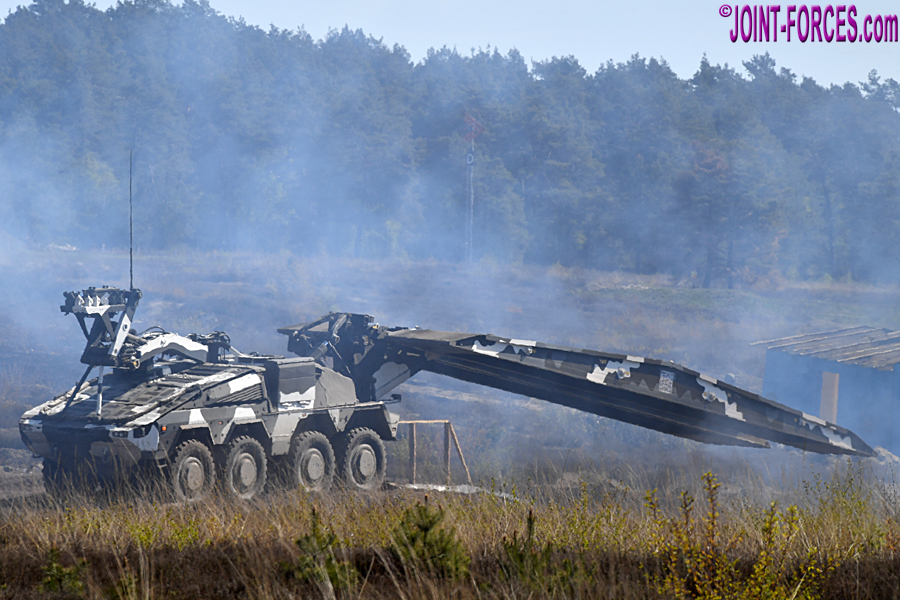
New Equipment: The firepower demonstration included a large number of new equipment types, ranging from demonstrators across prototypes to materiel that has already been procured and is currently manufactured and fielded. Among the systems displayed were, for example: the RCH 155 (Remote Controlled Howitzer 155mm) wheeled self-propelled artillery system, the Leopard 2A7A1 main battle tank fitted with the Trophy Active Protection System (APS); the GTK Boxer based Schakal wheeled armoured infantry fighting vehicle; the GTK Boxer-based Schwerer Waffenträger Infantrie (infantry fire support vehicle); the Leichter Kampfhubschrauber H145M light combat helicopter; the GTK Boxer-based Leguan bridgelayer; the GTK Boxer-based 30mm Skyranger short range air defence system; and the IRIS-T SLM (Infra Red Imaging System – Tail/Thrust Vector Controlled, Surface Launched Medium Range) air defence system.
[images © Carl Schulze 2026]
~