

As part of the NATO ARF STEADFAST DART 26 Media Day journalists witnessed an approximately hour long demonstration exercise, reports Carl Schulze.
~
Dateline 19 February 2026: Range 1A, Bergen Training Area, Germany. At high speed two Italian Army AH-129D Elicottero da Esplorazione e Scorta (scout and escort helicopters) fly down the range. Suddenly they halt mid-air, hovering only a few metres above the ground. With their 20mm M197 three-barrelled Gatling-type cannons the aircraft now engage targets a couple of hundred metres distant. The helicopters had been called forward to provide close air support to Spanish Special Forces, that only minutes ago had stormed a mock-up village in order to neutralise a high-value target.


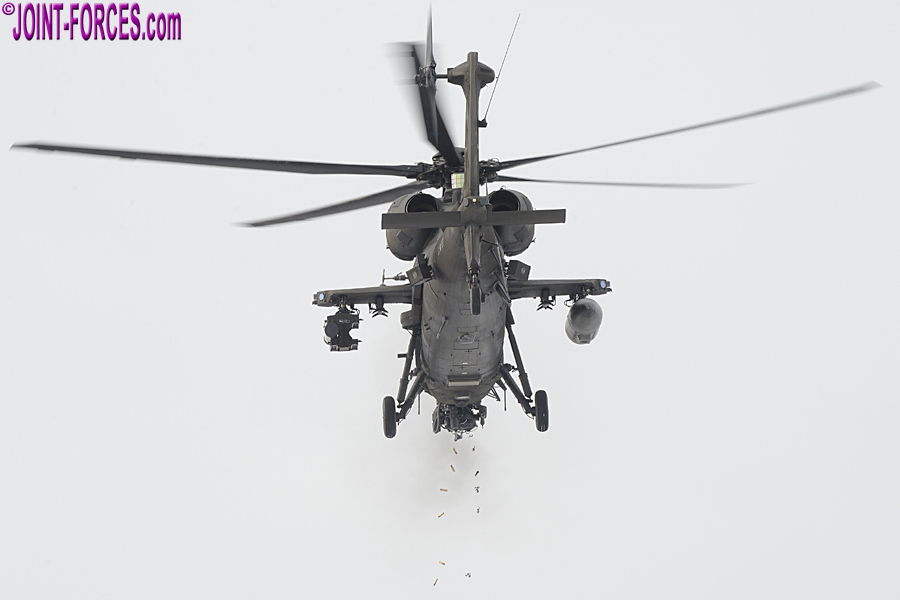
Live Fire Demonstration: The approximately one hour long, action-packed Media Day demo conducted as part of the of Exercise STEADFAST DART 26 (STDT26) aimed to illustrate just some of the capabilities of the multinational Allied Reaction Force. It started with a Special Forces raid and supporting helicopter live-fire, and culminated in a full-scale attack by Italian and Turkish mechanised infantry.

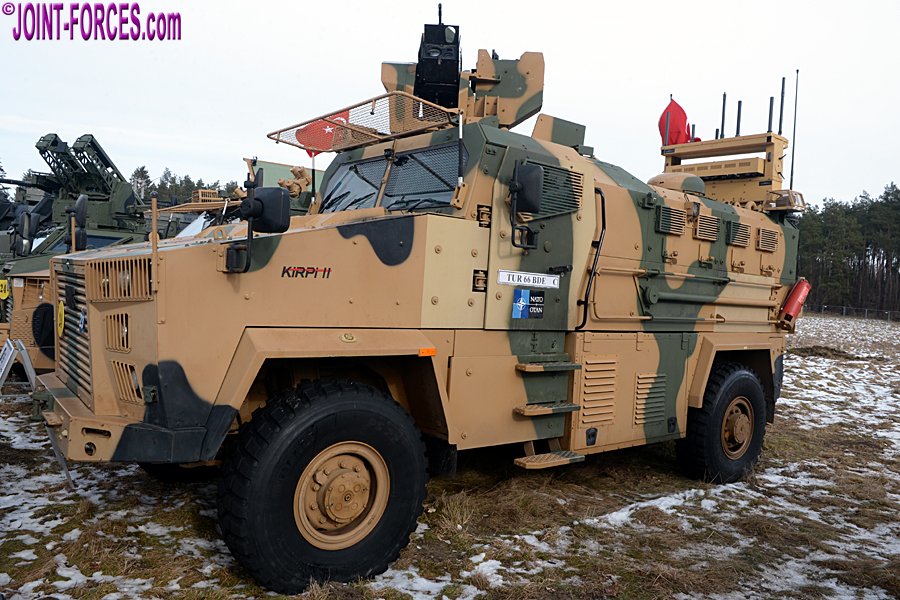

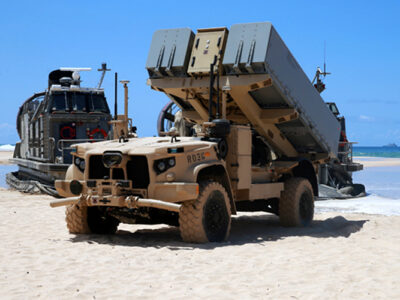
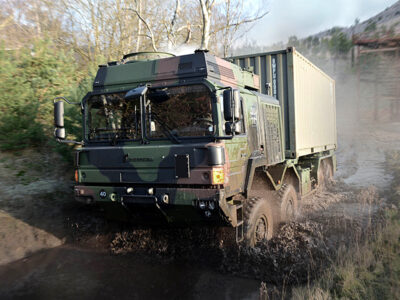
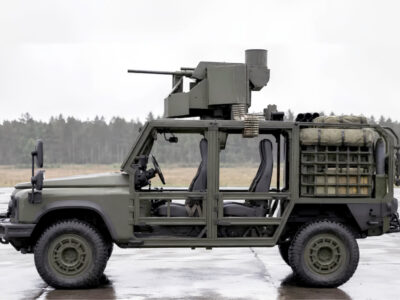
The attack was supported by artillery fire and involved combat engineers clearing obstacles. Following the STDT26 live fire demonstration, journalists had the chance to take a closer look at vehicles and equipment used during the exercise at a static display was situated at Lager Höllenberg camp, which also included various stands of defence industry companies. The main focus of the latter were small Unmanned Aerial Vehicles (sUAV) and Counter-small Unmanned Aerial Vehicle (C-sUAV) systems.
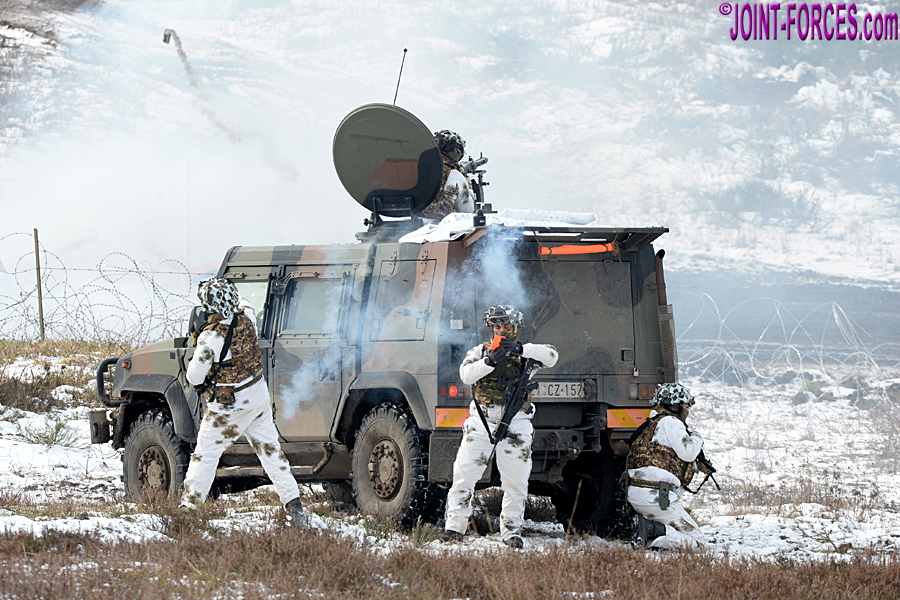
Facts and Figures: The NATO Allied Reaction Force (ARF) is a strategic, high-readiness, multi-domain capable force, able to operate across land, air, maritime, space, cyber, and Special Operations domains, capable of delivering effects at shorter notice.

Exercise STEADFAST DART 26 is aimed at demonstrating NATO’s ability to rapidly deploy and sustain forces over long distances in support of collective defence, in a simulated emerging conflict scenario involving a near-peer adversary. The exercise is aligned with NATO’s new generation of defence plans and was designed to strengthens the Alliance’s deterrence and defence posture.
The current exercise involves approximately 10,000 troops from 13 Allied nations. Major force contingents are provided by Czechia, Estonia, Germany, Greece, Italy, Lithuania, Spain,and Türkiye. These eight nations are supported by additional troops from Belgium, France, the Netherlands, Poland and the United Kingdom.

Equipment involved in Exercise STEADFAST DART 26 includes: 17 naval assets, including amphibious landing ships, frigates, mine countermeasure vessels, destroyers, and submarines; more than 20 aircraft, including EF2000 and F-16 fighters; over 1,500 wheeled and tracked vehicles, including main battle tanks, rocket launchers, self-propelled artillery, infantry fighting vehicles (IFVs), armoured personnel carriers (APCs) and amphibious assault vehicles; and intelligence, surveillance, and reconnaissance (ISR) assets, including unmanned aerial systems (UAS), unmanned ground vehicles (UGVs), and electro-optical and thermal sensors, as well as counter-UAS systems, electronic warfare and jamming equipment, decoys, and explosive ordnance disposal robots.

Three Phases: The ongoing Exercise STEADFAST DART 26 covers the full deployment cycle from force departure to redeployment and is structured into the following phases.
- Phase 1 – Strategic Deployment & Reception, Staging and Onward Movement (RSOM) – The Allied Reaction Force (ARF) units deploy from their home stations to the exercise area in Germany, demonstrating NATO’s ability to conduct rapid, large-scale force movement under peacetime conditions. The deployment is conducted by the use of a combination of air, sea, and ground transportation. RSOM activities will be conducted to ensure the smooth integration of arriving forces, enabling them to transition efficiently from deployment to operational readiness. This phase will test NATO’s procedures for cross-border movement, logistical coordination, and the rapid integration of multinational forces across domains.
- Phase 2 – Combat Enhancement & Force Integration Training (CET/FIT), from 9th to 20th February 2026 – This phase is the core execution period of the exercise. Participating units conduct intensive multinational training in a complex and dynamic environment, integrating land, air, maritime, special operations, cyber, and enabling forces. Activities include live fire training, amphibious operations, innovation demonstrations, static equipment displays, and operational rehearsals across multiple domains. As part of this phase also various demonstrations are conducted, to showcase the ARF’s capabilities across key functional areas, including Command and Control, Intelligence, Manoeuvre, Fires, Force Protection, and Sustainment.
- Phase 3 – Rearward Movement & Strategic Redeployment – Following the completion of the main training activities, participating forces will conduct coordinated rearward movements and their strategic redeployment to home stations or follow-on activities.
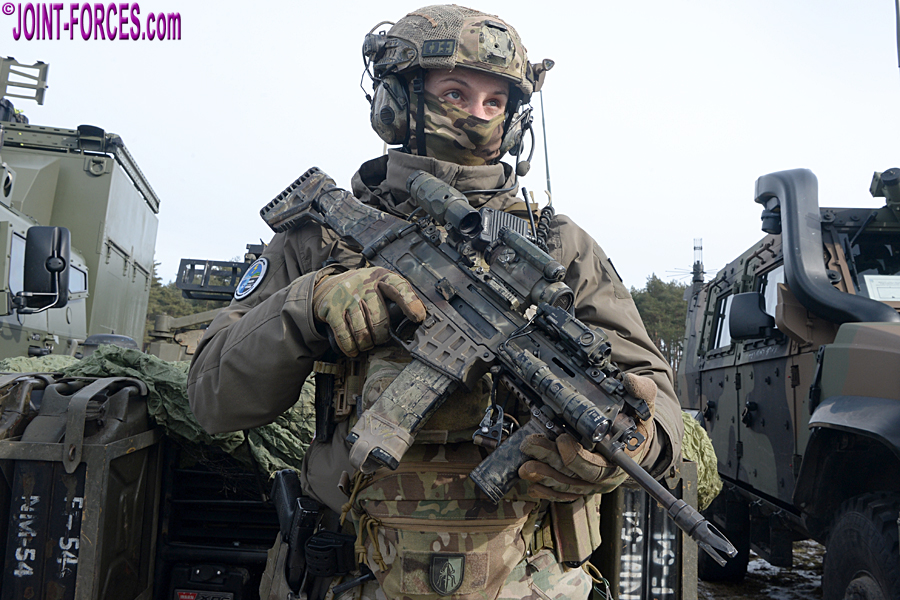

NATO Allied Reaction Force: According to NATO sources, “The NATO Allied Reaction Force (ARF) is a strategic, high-readiness, multi-domain capable force. It provides multi-domain forces from across the Alliance to produce effects at shorter notice than has previously been possible. The ARF is able to deploy at very short notice, supported by scalable multi-domain force packages to strengthen deterrence in peace and crisis or to create a strategic dilemma for adversaries. Its inherent flexibility allows the Supreme Allied Commander Europe (SACEUR) to allocate additional forces to the ARF Commander as required, in any situation.
“Within the NATO Concept for Deterrence and Defense of the Euro-Atlantic Area (DDA) the ARF plays a crucial role as part of the New NATO Force Model, which supports the DDA Concept. This innovative approach involves the deployment of multi-domain forces from across the Alliance, enabling faster response times than previously achievable. The establishment of the ARF ensures that forces are readily available to SACEUR, facilitating rapid responses to emerging situations across the spectrum of operations.
“The ARF is a capable of carrying out a full spectrum of missions. It can serve as a rapid deployable strategic reserve in crisis, it can be deployed to deter vertical / horizontal escalation, and it can also deploy rapidly in response to crises linked to other emerging situations. Multinational by design, an ARF is a clear demonstration of Allied commitment, cohesion and resolve.”
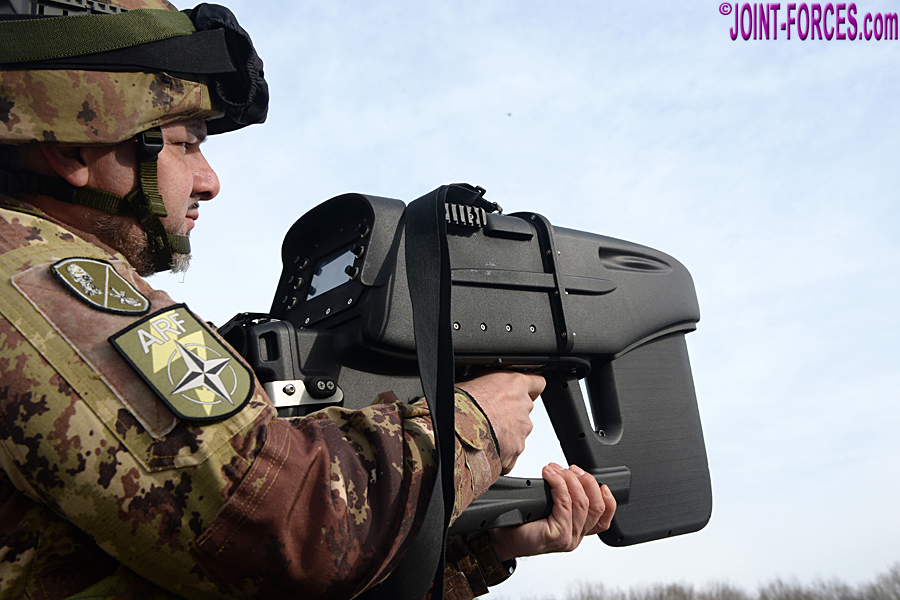
[images © Carl Schulze]
~