The standard Spanish Ración Individual de Combate (RIC) or Individual Combat Ration (for one day in the field) consists of three meal packs, writes Bob Morrison.
~
I have previously sampled single Spanish RIC meal packs, as well as several components provided by food company Jomipsa at trade fairs, but until Carl picked up this set of three cartons for us during a multinational exercise last year the opportunity had not arisen to try out a full day’s worth and compare contemporary packs.
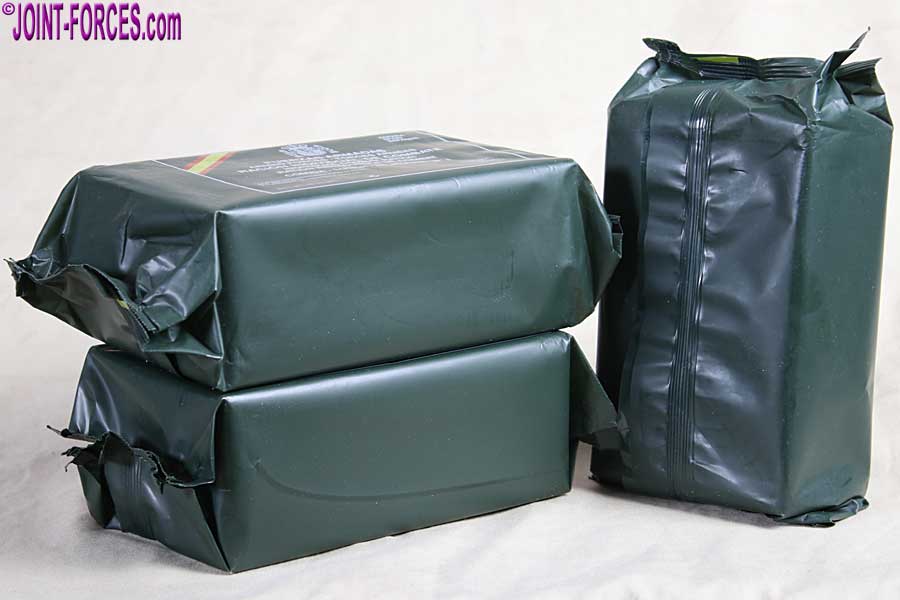
These distinctive Spanish cartons, protected from moisture by a dark green outer plastic sleeve, have not changed very much over the last couple of decades. A full 24-hour set comprises: Desayuno (or Breakfast) plus Comida “A” (or Lunch “A”) plus Comida “B” (or Dinner “B”); the Spanish noun comida has several English equivalents including meal, lunch and dinner. In total the edible components of the three packs, which are usually supplied along with 100g of bread each day, should provide a minimum of 2650kcal of energy and sufficient balanced nutrition for 24 hours on general training or operational duties. Seven different Menus are provided for each three packs to theoretically provide a week’s worth of variety, and two packs out of each seven are Halal certified. We have not, unfortunately, been able to source a list of all 21 current Menus.
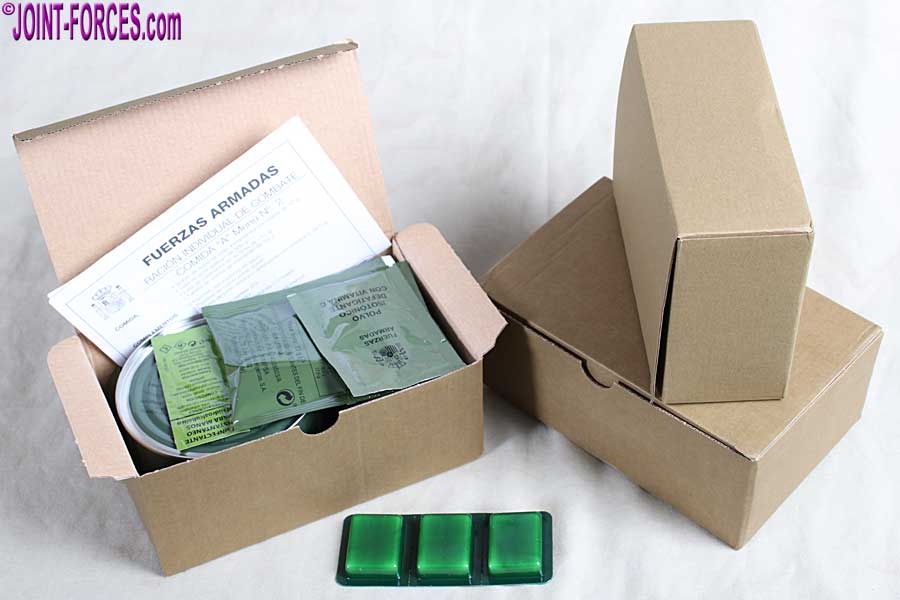

¤ Breakfast carton contents stack carefully tipped out [©BM]
Dimensionally the Breakfast and Main Meal cartons inside the green weatherproof outers measure roughly 155x105x65mm and 175x110x70mm respectively and approximate pack weight is 350g and 800g giving a daily load of around 2kg. As previously discovered, the larger meal packs will fit snugly inside a UK/NATO medium utility pouch. The major food components are canned rather than retort pouch type and a folding stove plus fuel tablets are included in each carton. All packed by Jomipsa or the UTE Ley consortium of this company plus Teógenes Ruiz SL and Alonso Hipercas SA, these three packs had late 2024 BBE dates but with the main contents being canned I felt safe enough sampling them.
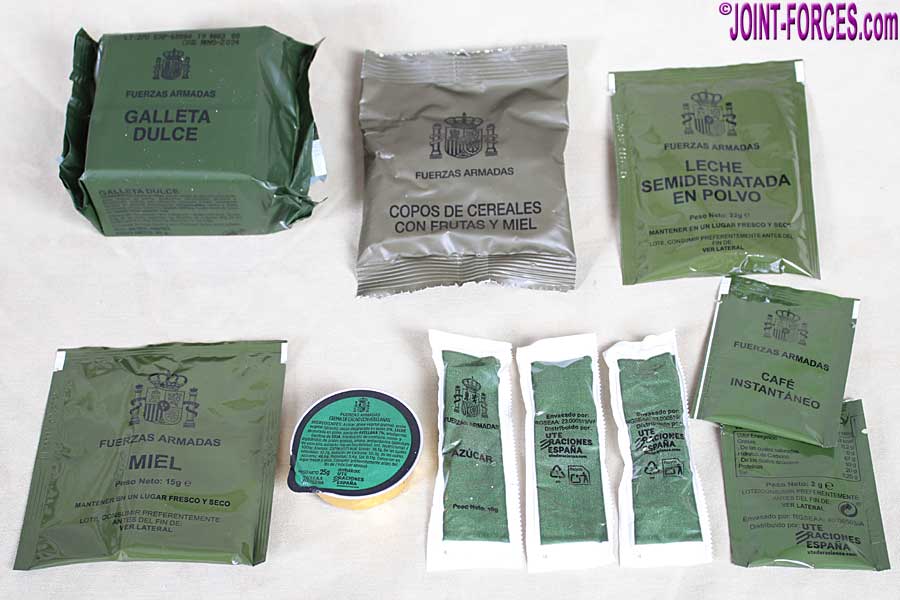
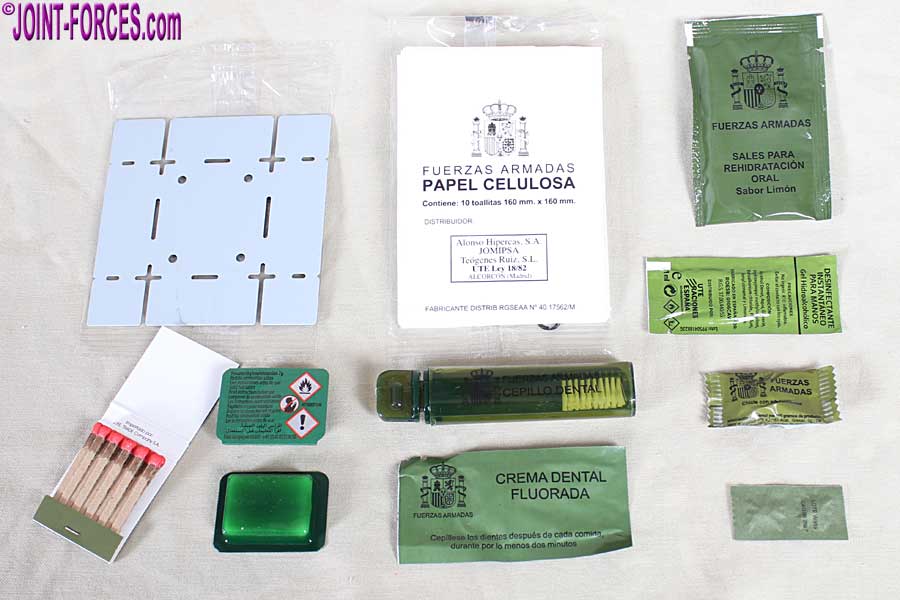
¤ Breakfast Menu 4 RIC accessories [©BM]
Turning first to Breakfast Menu 4, this included: 2x 2g Instant Coffee; 1x 22g Semi-Skimmed Milk Powder; 1x 15g Honey; 3x10g Sugar; 1x 30g Cereal Flakes with Fruit and Honey; 1x80g Sweet Biscuits; 1x 25g Tub of Cocoa & Hazelnut Spread; plus Accessories. The latter consisted of: 1x5g Oral Rehydration Salts; 1x Chewing Gum; 1x Book of Matches; 1x Heating Stove; 2x Fuel Tablets; 1x Pack of 10 Tissues; 1x Stowable Toothbrush; 1x Fluoride Toothpaste; 1x Instant Hand Disinfectant; 2x Water Purification Tablets; and an Information Sheet in Spanish, English and French (the latter being the two official NATO languages). It should be noted that breakfast is not usually a substantial meal for Spaniards, with coffee plus toast spread with olive oil and tomato paste being the norm. For my breakfast I added the specified 220ml of warm water to the milk powder and cereal, which I found to be rather tasty if a bit watery, and finished off with a couple of biscuits spread with cocoa and hazelnut paste washed down with black coffee.
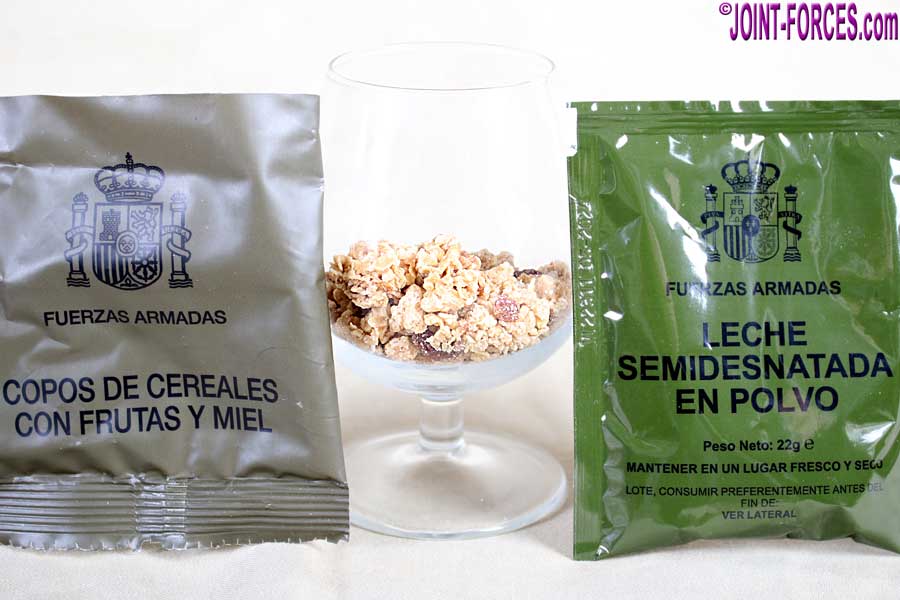
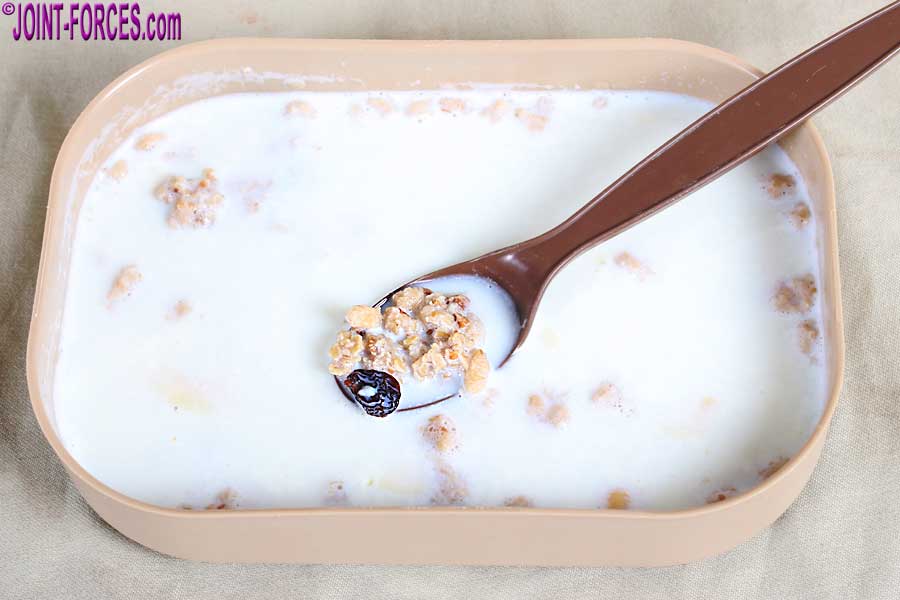
¤ Reconstituted semi-skimmed milk and cereal ~ a lot tastier than it might look [©BM]
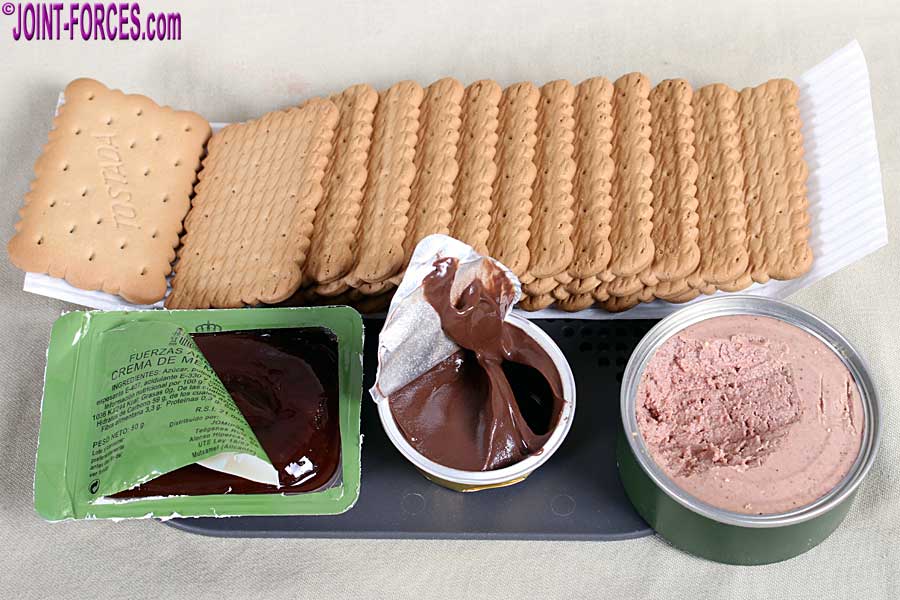
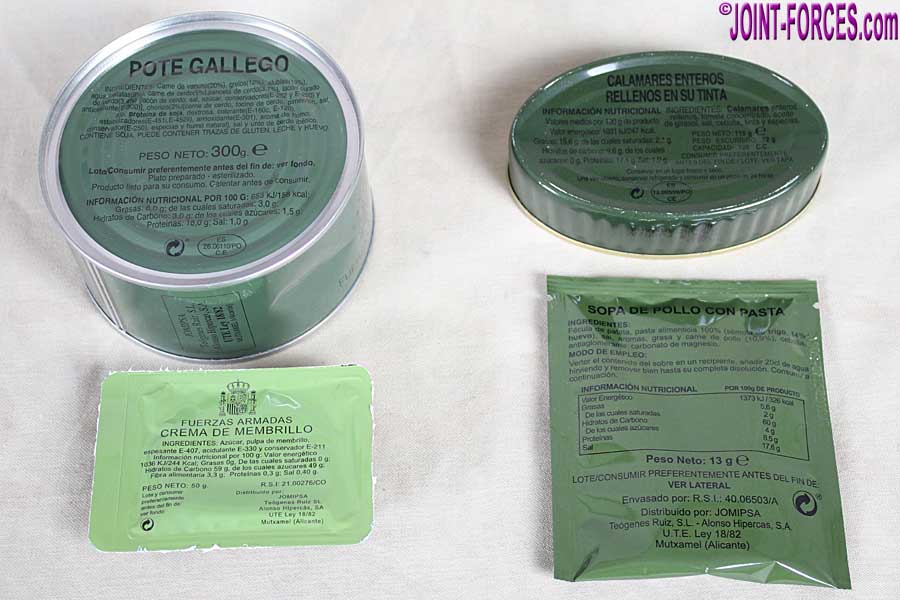
Now to Meal A Menu 2 (or Lunch) which included: 1x13g Chicken & Pasta Instant Soup; 1x 115g can of Squid in Ink or Calamares Enteros Rellenos En Su Tinta; 1x300g can of Galician-style Stew or Pote Gallego ~ see footnote; 1x 50g tub of Quince Jam; plus Accessories. Common to both “A” and “B” meals, the Accessories consisted of 4x 5g Isotonic Drink Powder, 1x Chewing Gum; 1x Book of Matches; 1x Heating Stove; 3x Fuel Tablets; 1x Pack of 10 Tissues; 1x Fluoride Toothpaste; 1x Instant Hand Disinfectant; 2x Water Purification Tablets; and an Information Sheet in three languages. As it was a beautiful sunny day with the thermometer in Devon heading for 30°C I decided to use the fuel tablet heater and pretend I was preparing my Spanish lunch in Galicia. For starter I tried out the squid, though I didn’t finish it all as I’m not really a great fan of either this mollusc or octopus. For afters I had some of the quince jam spread on a couple of the sweet biscuits held over from breakfast.
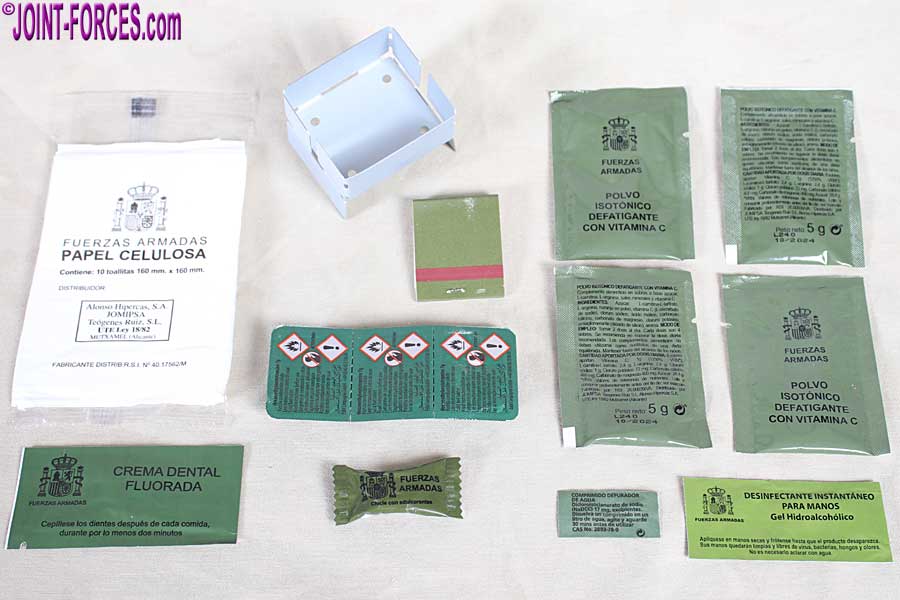
¤ Main Meal Accessories ~ these are common to both A and B cartons [©BM]
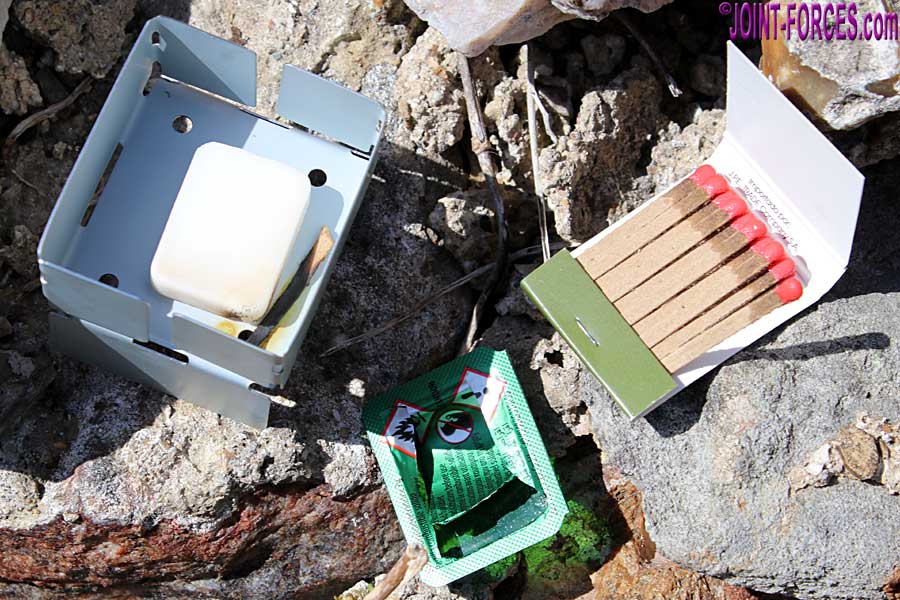
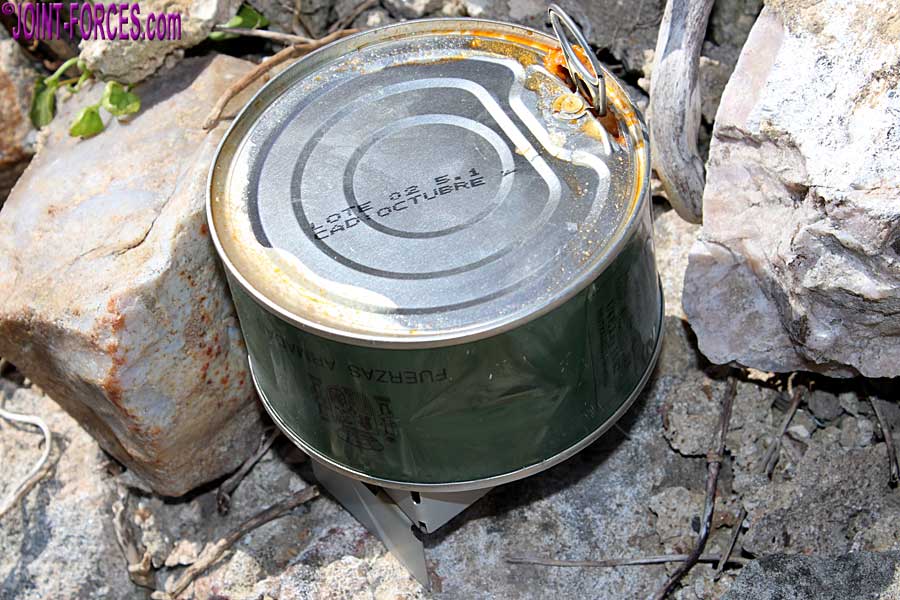
¤ Heating the Pote Gallego ~ peel back the ring-pull slightly before heating and watch you don’t burn yourself as the can gets incredibly hot [©BM]


¤ The canned squid (Calamares) was okay but if I’m honest not really to my taste and I didn’t finish it [©BM]
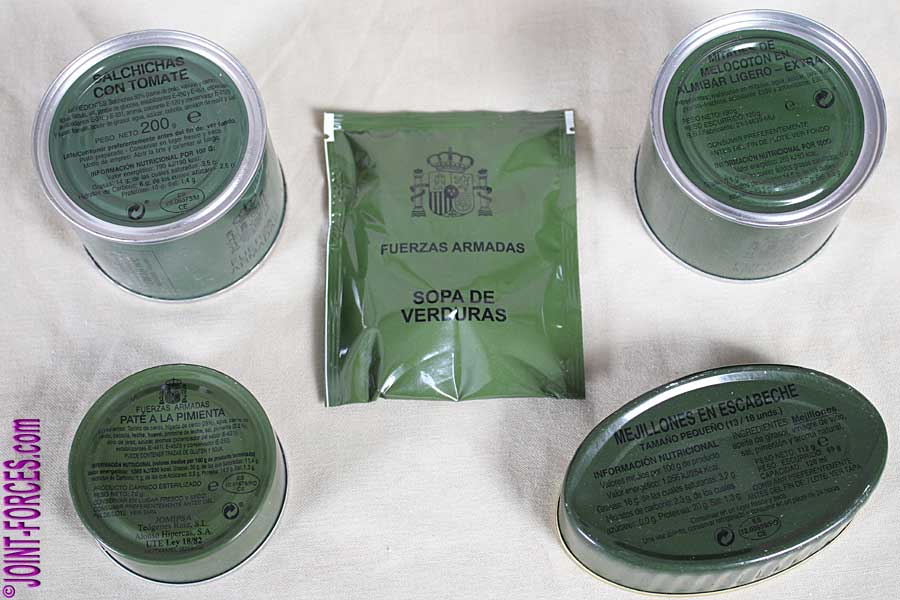
It would be silly of me to consume the full contents of a 24-hour ration pack on days when I am mostly sedentary in front of my computers, so I held over Meal B Menu 1 (or Dinner) until the following day. Also, quite naturally, geared predominantly to Spanish tastes this pack included: 1x 20g Vegetable Instant Soup; 1x200g can of Pork Sausages in Tomato Sauce; 1x 112g can of Pickled Mussels; 1x 190g can of Peaches in Syrup; 1x 70g tub of Pâté; plus Accessories as per Meal A Menu 2. The pâté went on the last of the sweet biscuits from the breakfast carton and the instant soup sachets from both of the larger packs, along with the second instant coffee sachet, ended up in my travel food & drinks pack; waste-not, want-not. I usually save ration pack isotonic drinks powders for warmer days or climes, but over the last few days as Southwest England experienced its third heatwave of 2025 I have gone through a few added to chilled mineral water from the fridge. Incidentally, the instruction sheets say that those issued with RIC packs should consume two doses of four sachets each day.
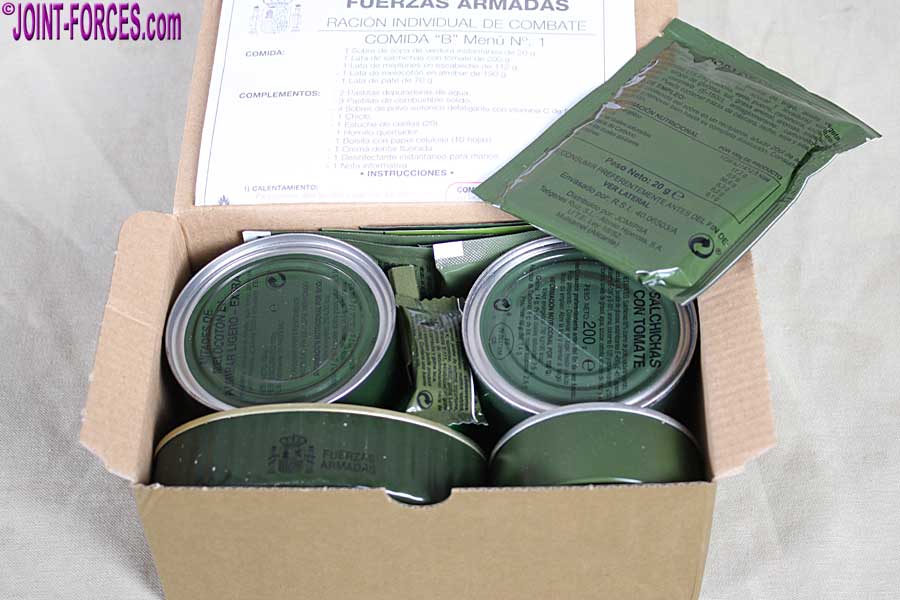


Footnote: Over the years I have visited Galicia a few times and while there I tried out the local cuisine. Pote Gallego is a traditional broth (caldo) from this north-west region of Spain and a dish also commonly found in neighbouring northern Portugal, usually made from kale, potatoes, white beans, ham, pork belly and chorizo. On my first trip to Galicia accompanied by Ramilla we spent a night in the port town of Muros while touring along the Fisterra coast and as on their menus all the restaurants were advertising locally sourced mussels harvested just offshore I was persuaded by Her Ladyship to to give them a go; I was pleasantly surprised to find that I really enjoyed them and, although the above ration pack tinned mussels were pickled, I found them to be perfectly acceptable as a starter. Of course there is no guarantee that these canned mussels originated in Galicia, but as there are five internationally highly regarded areas of mussel cultivation in the region, including Muros-Noia Bay, it would not surprise me if this was where they originated.
[images © Bob Morrison]
~
Further reading:-