

Hanwha is unveiling next-generation defence solutions tailored to the US Army’s modernisation priorities at AUSA 2025 in Washington DC.
~
Press Release, Seoul, 12 October 2025: Hanwha’s defence affiliates are unveiling next-generation defence solutions tailored to the US Army’s modernisation priorities — including a new wheeled self-propelled howitzer and the localisation of the 155mm modular charges — at the AUSA 2025 exhibition in Washington, DC, from October 13-15.
Team Hanwha – Hanwha Aerospace, Hanwha Systems, and Hanwha Defense USA (HDUSA) – are joining the annual show hosted by the Association of the US Army. The show is expected to attract around 44,000 visitors from 92 countries and serves as the premier venue for global defence companies to showcase land-based military innovations.
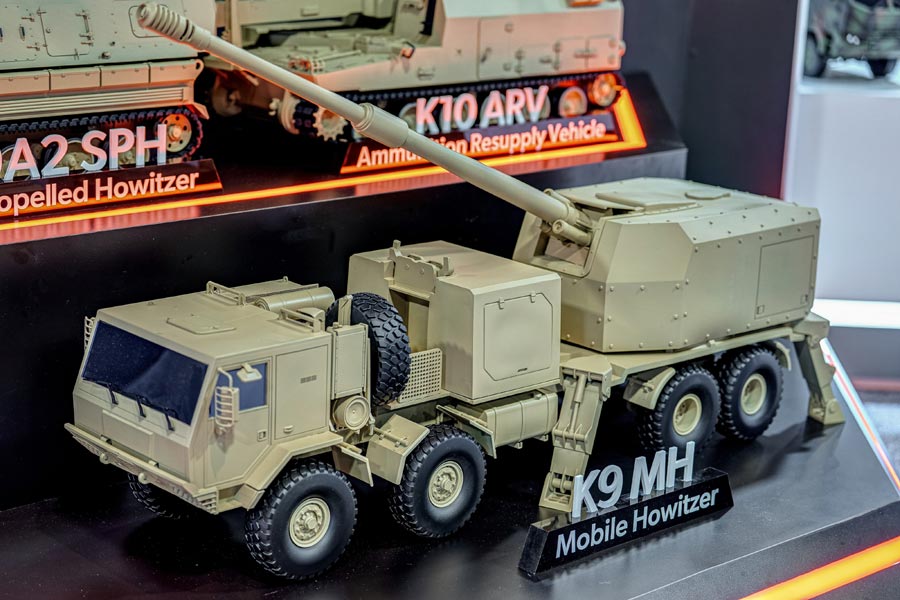
At this year’s exhibition, Hanwha Aerospace is displaying a full-scale K9A1 Self-Propelled Howitzer, presenting the future roadmap of the K9 artillery system, which has been ordered by more than 10 countries worldwide. In particular, the company will unveil for the first time a wheeled K9A2 concept, tailored to meet the US Army’s long-range and high-mobility artillery requirements.
The K9A2 features an automated ammunition handling and loading system that increases its rate of fire from six to over nine rounds per minute. As the US Army seeks next-generation artillery systems with enhanced range, precision, mobility, and sustained fire capability, Hanwha Aerospace is proposing the 8×8 wheeled K9A2, integrating the K9A2’s advanced auto-loading turret onto a wheeled platform to deliver greater flexibility and mobility on future battlefields.
Maro Kim, Head of Strategy at Hanwha Defense USA, said : “The K9 howitzer is already operated by more than 10 nations and stands as the world’s most proven tracked artillery system. By mounting the K9A2’s automated turret on an 8×8 wheeled platform, we can meet the US Army’s requirements for long-range precision firepower, rapid deployment, and sustained resupply operations.”
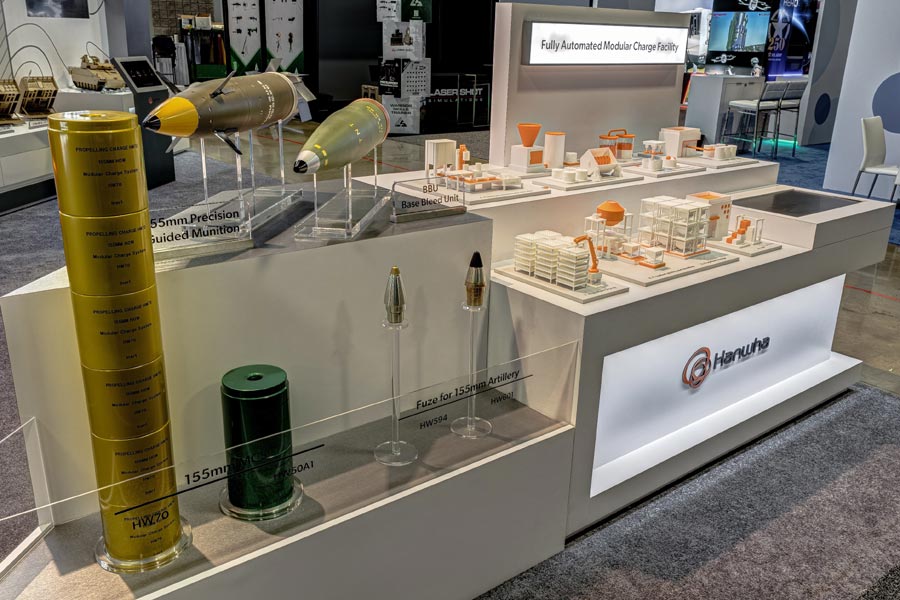
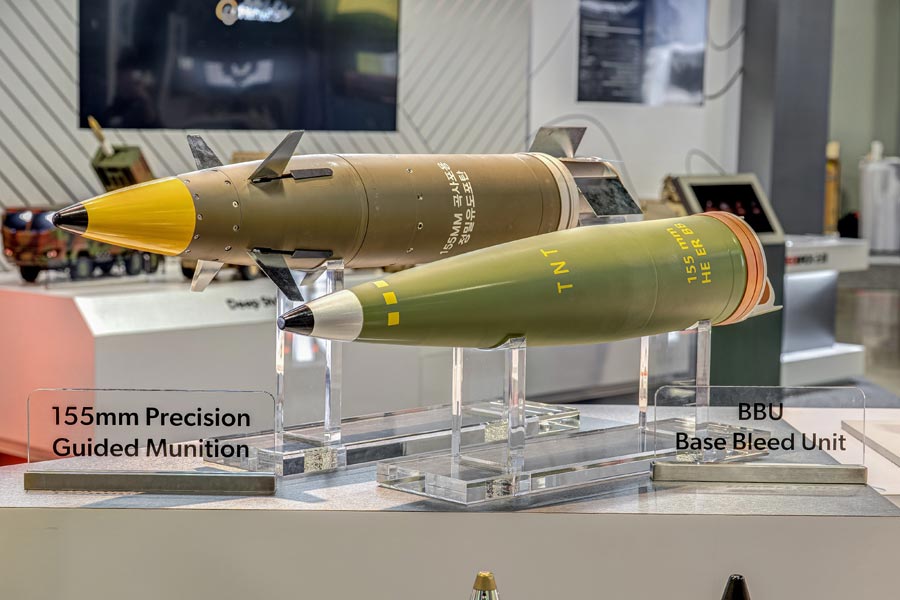
Hanwha Aerospace is also focusing on plans to localise production of the 155mm Modular Charge System (MCS) in the United States. Manufactured in a world-class smart factory environment, the MCS ensures high consistency, precision, and safety through automated production processes. The system offers excellent compatibility with NATO-standard 155mm artillery and provides precise control of chamber pressure and range, ensuring superior performance and reliability.
Following the war in Ukraine, the global shortage of 155mm artillery ammunition has become a pressing issue. Hanwha aims to strengthen the supply chain resilience of the US Army and its allies by establishing local MCS production capacity and industrial partnerships in the United States.
Meanwhile, Hanwha Systems is exhibiting its short-range AESA radar and multi-layered Counter-Unmanned Aerial System (C-UAS) defence solution, offering integrated electronic systems optimised for homeland security missions in the US
The short-range AESA radar is designed to detect and track low-altitude aerial threats, serving as a key sensor to maximise the operational performance of Short-Range Air Defence (SHORAD) systems. It can also be mounted on various platforms, including wheeled armoured vehicles, ground surveillance systems, and small naval vessels.
The multi-layered C-UAS system is designed to counter the growing threat of drones and unmanned aerial vehicles on modern battlefields. By integrating detection, identification, and neutralisation capabilities, it provides a comprehensive defence architecture for protecting critical infrastructure — including potential applications in US border surveillance and facility protection.
Jaeil Son, President and CEO of Hanwha Aerospace and Hanwha Systems, said : “Through AUSA 2025, Hanwha aims to reinforce its position as a global defence company by showcasing an integrated suite of next-generation solutions across artillery, munitions, and defence electronics. We will continue to expand customer-tailored solutions and global partnerships to meet the modernisation needs of the US Army and strengthen the defence capabilities of allied nations.”
~