
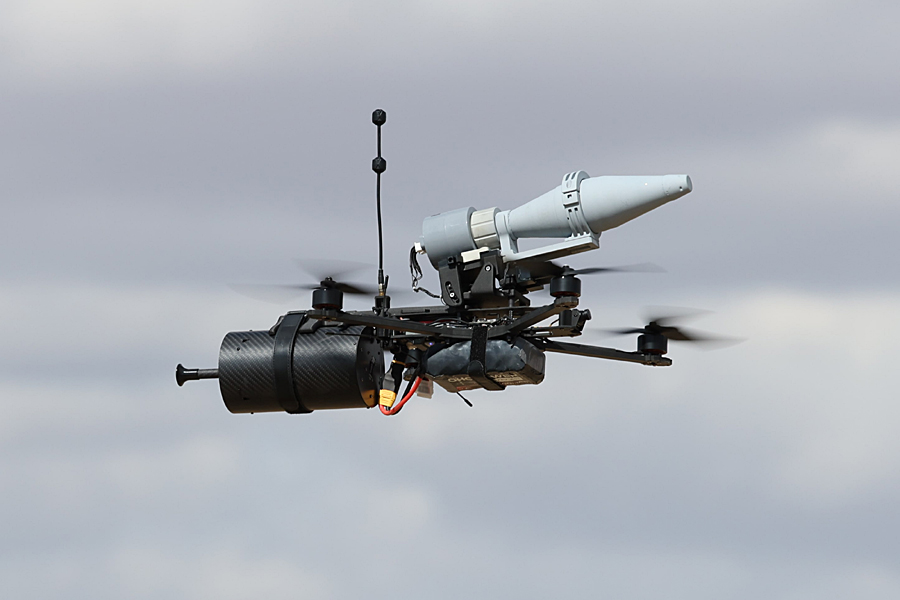
The STM ALKAN kamikaze FPV drone has successfully completed its acceptance tests and entered the inventory of Turkish Security Forces.
~
Press Release, Ankara, 23 November 2026: Developed by STM to meet the evolving requirements of the modern battlefield, the kamikaze FPV drone ALKAN FPV has successfully completed its acceptance tests and entered the inventory of Turkish security forces.
STM, one of the leading engineering companies in the Turkish defence industry, continues to deliver advanced unmanned systems to end users. Building on its extensive experience in tactical UAV systems, STM has expanded its expertise into FPV technologies and completed the first deliveries of STM ALKAN FPV. Following successful acceptance activities, multiple ALKAN FPV systems were delivered to Turkish security forces.
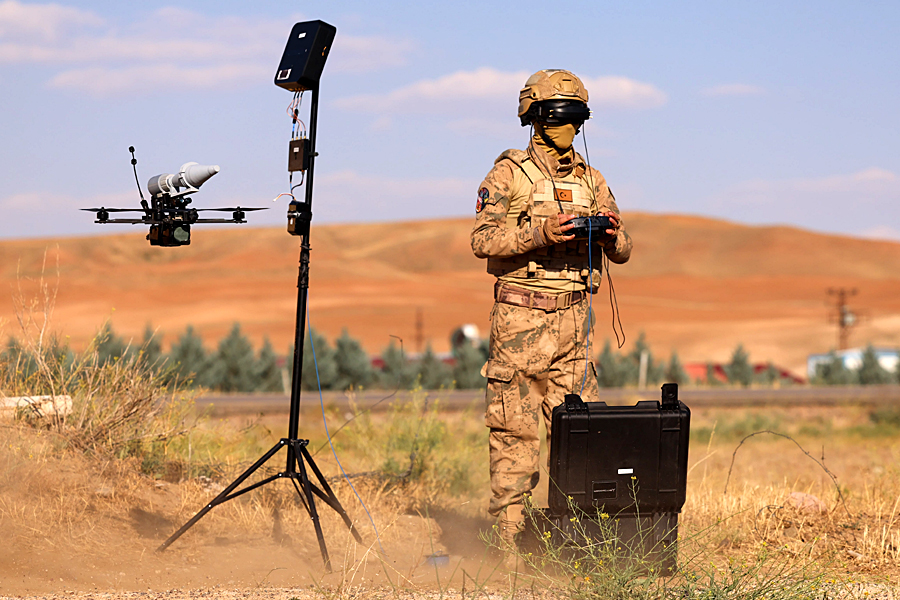
Highlighting STM’s leading position in autonomous systems, STM General Manager Özgür Güleryüz said: “To date, we have delivered systems such as KARGU, BOYGA, TOGAN and ALPAGU to the inventory of Turkish security forces and achieved exports to more than 15 countries across four continents. We are now bringing the operational experience gained in the field and our engineering expertise in autonomy to FPV technologies. Following successful acceptance tests, ALKAN FPV, our first solution in this field, has now entered the inventory of Turkish security forces.
One of the key features that differentiates ALKAN FPV from conventional FPV systems is its advanced military safety fuse, developed to military standards. This provides a high level of safety throughout transportation and mission execution. We have also integrated STM’s autonomy and image-processing capabilities into ALKAN FPV, enabling the system to perform an autonomous terminal dive and precision strike once the operator designates the target. This reduces operator dependency while enhancing strike accuracy and mission effectiveness. We will continue with further deliveries of ALKAN FPV in the coming period, while providing end users with innovative, advanced solutions designed to meet evolving operational requirements.”
Precision Strikes Against Fixed and Moving Targets: The product, previously introduced as KARGU FPV, has been renamed STM ALKAN FPV. Designed as an effective solution against dynamic threats in asymmetric warfare environments, ALKAN FPV operates through an operator-controlled real-time vision system. Equipped with either an anti-personnel or armour-piercing warhead, ALKAN FPV combines high manoeuvrability, effective day-and-night operational capability and a low radar cross-sectional area to deliver precision strikes against both fixed and moving targets.
Its advanced military safety fuse, compliant with MIL-STD-331, ensures a high level of safety during transportation and mission execution, while its distance fuse sensor enables automatic detonation at an adjustable distance. Supported by image processing, ALKAN FPV’s autonomous terminal diving capability enables a precise strike on a target designated by the operator.
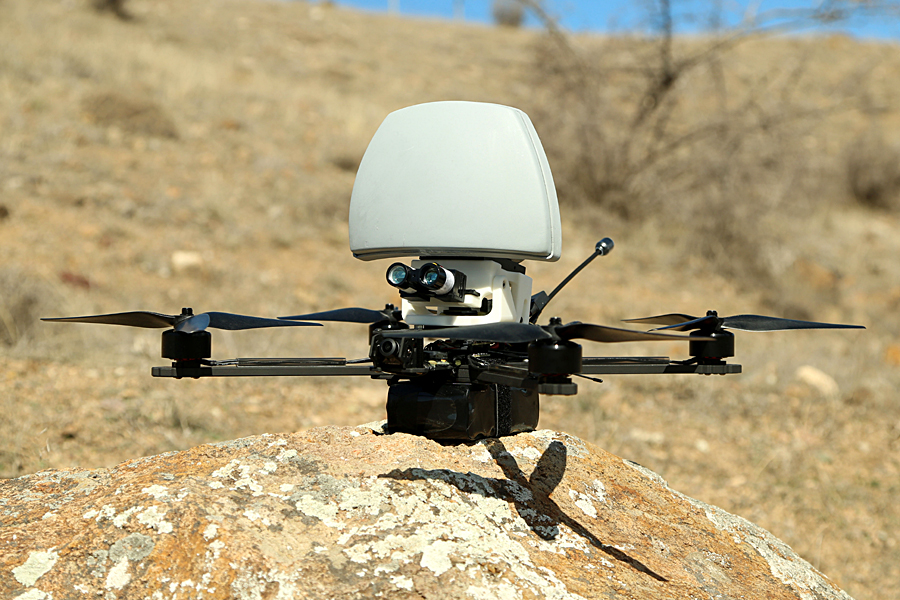
ALKAN FPV offers a mission range of 10 kilometres and a maximum speed of 140 km/h. The system has a mission altitude of 500 metres and a maximum altitude of 5,500 metres above mean sea level (MSL). It provides an endurance of more than 20 minutes in kamikaze configuration and up to 44 minutes in observation configuration without munition and fuse.
Resilience Against Electronic Warfare with Fibre-Optic Control: In addition to RF communication, ALKAN FPV can also be controlled via a fibre-optic cable. This capability allows the system to continue its mission without being affected by electromagnetic jamming, enabling secure flight and precise targeting without reliance on GPS or RF signals.
Common Munition and Fuse System for KARGU and ALKAN FPV: ALKAN FPV uses the same munition and fuse systems as KARGU, the field-proven member of STM’s tactical UAV family and Türkiye’s first indigenous rotary-wing loitering munition system. STM-designed anti-personnel and armour-piercing warheads, equipped with military-grade fuses, can be used interchangeably on both KARGU and ALKAN FPV without any modification. This common architecture also enables existing KARGU munitions in service to be employed within the FPV operational concept.
FPV Drone ? FPV (First Person View) Drones have shown their value, particularly during the Ukraine-Russia war, as a low-cost and effective attack tool that the operator flies through real-time images transmitted from drone’s camera to a pair of smart glasses or monitor, directing it to the target for a precision strike.
~